SIM800 GPRS MQTT Test: Bringing Cellular IoT Online Without Wi-Fi
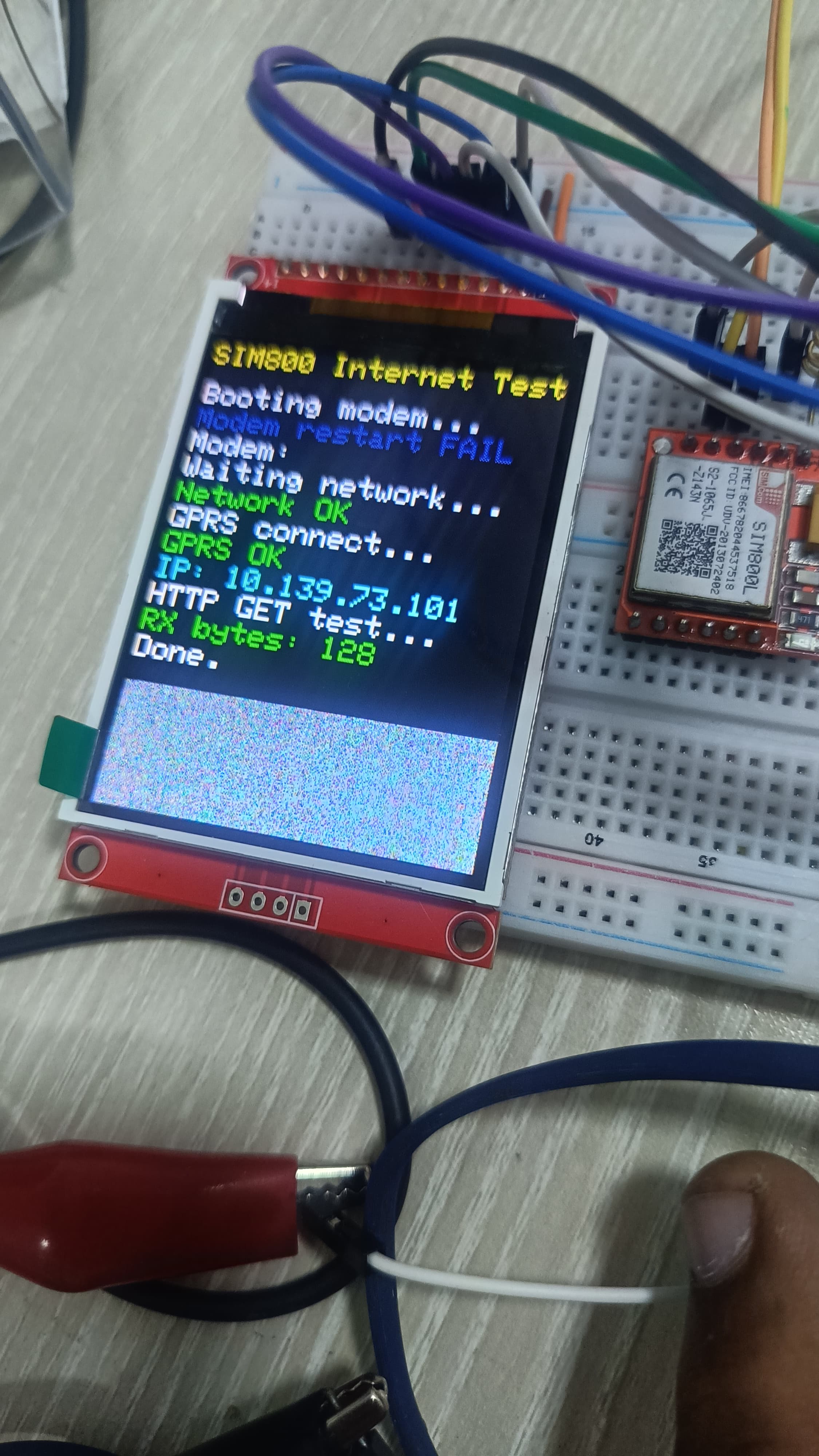
Field notes from building a SIM800 GPRS + MQTT test bench: boot, network, GPRS, HTTP, MQTT — all logged on a TFT instead of a serial monitor.
Why bother with a SIM800 in 2026
Wi-Fi is everywhere — until it is not. The moment you start thinking about an energy meter in a workshop, a security node in a remote shop, an irrigation controller on a farm, or a vehicle tracker, Wi-Fi stops making sense. Cellular makes a lot more sense.
So I built a small SIM800 GPRS test bench that I could carry around, plug in and demo without dragging a laptop along. The point was to make every step of the cellular boot visible.
How the boot sequence looks
The firmware walks through it out loud, on a small TFT:
- Modem alive?
- Network registered?
- GPRS attached?
- Got an IP?
- HTTP GET worked?
- RX bytes count
- MQTT connecting / connected
When something fails, the display tells me exactly where. That single property turned out to be more useful than any other feature.
MQTT over GPRS, honestly
MQTT over GPRS is not as nice as MQTT over Wi-Fi. There is latency, weak signal, dropped sessions and the occasional silent disconnect. The firmware needs:
- Retry logic with proper delays.
- Keepalives that match what the network actually tolerates.
- A clean modem-reset path for when the session collapses.
My screen shows modem init, GPRS connect attempts, MQTT host and port, handler binding and connection state. Boring screens, but exactly what you want during bring-up.
The first thing to check is always power
I spent a frustrating evening blaming firmware that turned out to be a tired USB cable. SIM800 modules draw current in spikes, and any weakness in the supply will make the module restart at the worst moment.
Short wiring, common ground, enough current headroom and a couple of bulk capacitors close to the module made all my "firmware bugs" disappear.
Where this becomes useful
This test bench is the base I want to reuse for a proper cellular-IoT project — energy meter, irrigation controller, GPS tracker, anything where Wi-Fi is not on the table.
Next steps: turn the modem code into a proper driver with reconnect states, watchdog support, APN config and a small payload queue. The modem side of cellular IoT is mostly about patience: power stability, state management and very calm debugging.