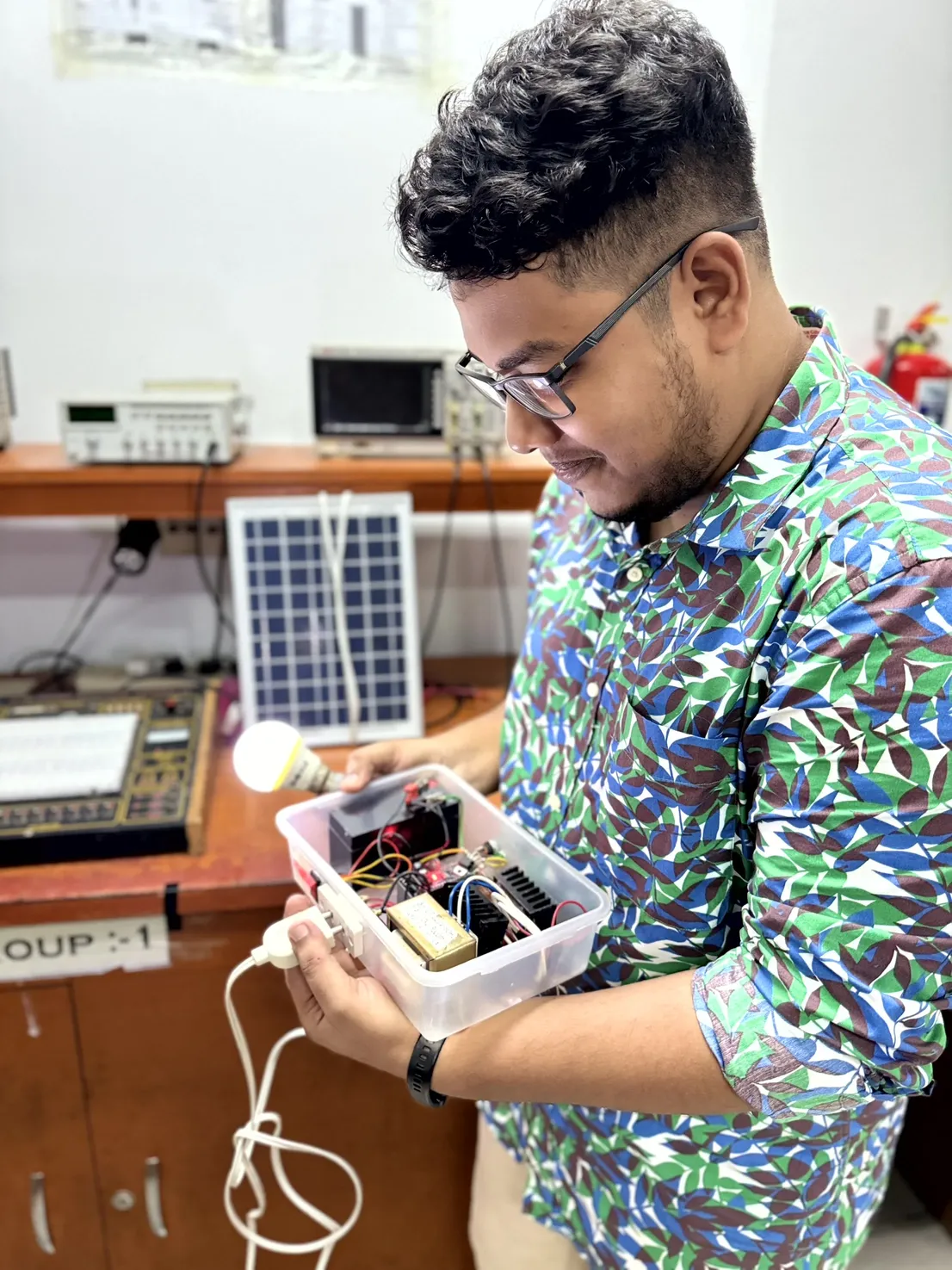
SPWM-based pure-sinewave inverter with a solar charging stage — built around the thesis idea of hybrid rural power.
Overview
My thesis was about reliable power for rural Bangladesh, and this inverter is the practical piece that grew out of that work. It combines a sinewave inverter stage with a solar charging stage so the same setup can run from grid charging or sunlight depending on what is available.
The goal was a cleaner output than a typical square-wave inverter and an architecture that fits the kind of hybrid setups villages here actually use.
Specifications
RolePower electronics designer
MicrocontrollerArduino / dedicated PWM controller
ModulesMOSFET driverTransformerSolar charge controllerBattery bank
ProtocolsPWMADC
Tech tagsPure Sinewave InverterSPWMSolar ChargingMPPTHybrid Power
Architecture
Solar input charges the battery, and the inverter stage converts stored DC energy into AC output using SPWM-controlled switching.
Project photos
Inverter hardware
Videos
Implementation details
Firmware
Firmware or control logic generates SPWM drive signals, monitors battery/solar state, and supports safe inverter operation.
PCB
PCB design must handle high-current switching paths, gate-drive routing, heat dissipation, and isolation between control and power sections.
Power
Battery, solar input, and inverter output require protection, fusing, heat management, and careful wiring.
Components / BOM
MOSFET H-bridge / push-pull stage, Transformer, PWM controller, Solar charge controller stage, Battery bank
Engineering challenges
Generating a clean waveform, managing heat from switching losses, and protecting the battery from over-discharge and over-charge.
Solutions
Separated the control stage from the power stage, used SPWM for the waveform, tested at low power first, and only then pushed to higher loads.
Results & metrics
Shows the architecture of a small hybrid solar backup-power system suitable for the rural-supply context my thesis targeted.
Future improvements
Closed-loop voltage feedback, LC output filtering, thermal shutdown, MPPT on the solar side and a proper metal enclosure.